.jpg)


"HMMM . . .TALAGA HA? KASALI BA AKO RIYAN?"


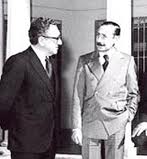
Kissinger’s top deputy on Latin America, William Rogers, told him two days after the coup that “we’ve got to expect a fair amount of repression, probably a good deal of blood, in Argentina before too long.” … (National Security Archive, March 23, 2006)
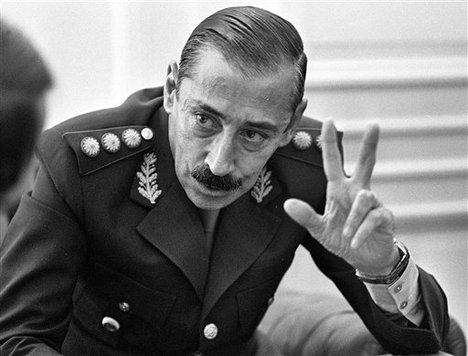
”Videla was among the generals convicted of human rights crimes, including “disappearances”, torture, murders and kidnappings. In 1985, Videla was sentenced to life imprisonment at the military prison of Magdalena.”Wall Street and the Neoliberal Economic Agenda
“During the first trial of leaders of the military junta in 1985, Yorio declared, “I am sure that he himself gave over the list with our names to the Navy.” The two were taken to the notorious Navy School of Mechanics (ESMA) torture center and held for over five months before being drugged and dumped in a town outside the city. (See Bill van Auken, “The Dirty War” Pope, World Socialist Website and Global Research, March 14, 2013Among those “disappeared” by the death squads were Mónica Candelaria Mignone and María Marta Vázquez Ocampo, respectively daughter of the founder of of the CELS (Centro de Estudios Legales y Sociales) Emilio Mignone and daughter of the president of Madres de Plaza de Mayo, Martha Ocampo de Vázquez. (El Periodista Online, March 2013).
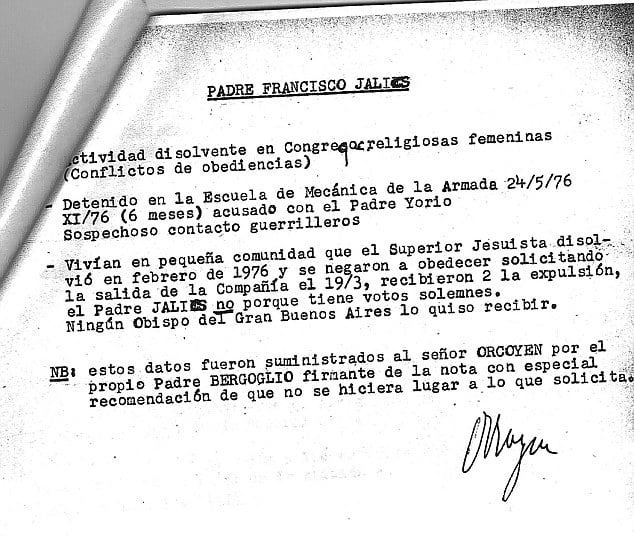
“Bergoglio [Pope Francis I] twice invoked his right under Argentine law to refuse to appear in open court, and when he eventually did testify in 2010, his answers were evasive”: “At least two cases directly involved Bergoglio. One examined the torture of two of his Jesuit priests — Orlando Yorio and Francisco Jalics — who were kidnapped in 1976 from the slums where they advocated liberation theology. Yorio accused Bergoglio of effectively handing them over to the death squads… by declining to tell the regime that he endorsed their work. Jalics refused to discuss it after moving into seclusion in a German monastery.” (Los Angeles Times, April 1, 2005)The Secret Memorandum
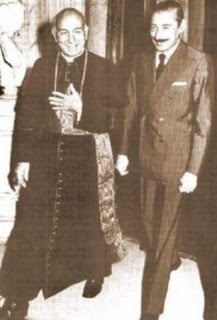
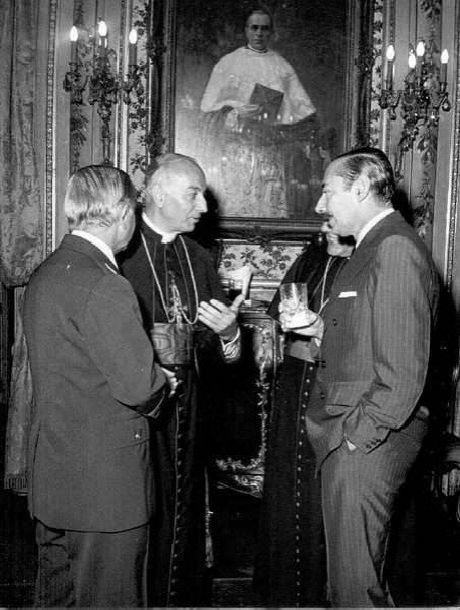
“Videla and other plotters received the blessing of the Archbishop of Paraná, Adolfo Tortolo, who also served as vicar of the armed forces. The day of the takeover itself, the military leaders had a lengthy meeting with the leaders of the bishop’s conference. As he emerged from that meeting, Archbishop Tortolo stated that although “the church has its own specific mission . . . there are circumstances in which it cannot refrain from participating even when it is a matter of problems related to the specific order of the state.” He urged Argentinians to “cooperate in a positive way” with the new government.” (The Humanist.org, January 2011, emphasis added)In an interview conducted with El Sur, General Jorge Videla, who is now serving a life sentence for crimes against humanity confirmed that:
“He kept the country’s Catholic hierarchy informed about his regime’s policy of “disappearing” political opponents, and that Catholic leaders offered advice on how to “manage” the policy.It is worth noting that according to a 1976 statement by Archbishop Adolfo Tortolo, the military would always consult with a member of the Catholic hierarchy in the case of the “arrest” of a grassroots member of the clergy. This statement was made specifically in relation to the two kidnapped Jesuit priests, whose pastoral activities were under the authority of Society of Jesus “provincial” Jorge Mario Bergoglio. (El Periodista Online, March 2013).
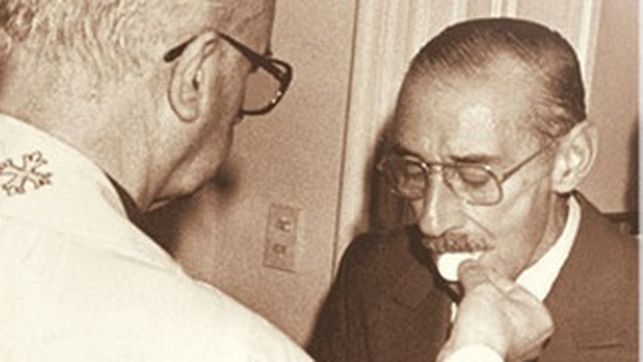
Jorge Videla said he had “many conversations” with Argentina’s primate, Cardinal Raúl Francisco Primatesta, about his regime’s dirty war against left-wing activists. He said there were also conversations with other leading bishops from Argentina’s episcopal conference as well as with the country’s papal nuncio at the time, Pio Laghi.
“They advised us about the manner in which to deal with the situation,” said Videla” (Tom Henningan, Former Argentinian dictator says he told Catholic Church of disappeared, Irish Times, July 24, 2012, emphasis added)
“an interrogation and torture centre in the Naval School of Mechanics, ESMA [close to Buenos Aires], … It was a sophisticated, multi-purpose establishment, vital in the military plan to assassinate an estimated 30,000 “enemies of the state”. … Many thousands of ESMA’s inmates, including, for instance, two French nuns, were routinely tortured mercilessly before being killed or dropped from aircraft into the River Plata.The Catholic Church: Chile versus Argentina
Massera, the most forceful member of the triumvirate, did his best to maintain his links with Washington. He assisted in the development of Plan Cóndor, a collaborative scheme to co-ordinate the terrorism being practised by South American military régimes. (Hugh O’Shaughnessy, Admiral Emilio Massera: Naval officer who took part in the 1976 coup in Argentina and was later jailed for his part in the junta’s crimes, The Independent, November 10, 2010, emphasis added)
The man behind the interfaith Comité Pro-Paz was Cardinal Raúl Silva Henríquez. Shortly after the coup, Silva, … stepped into the role of “upstander,”a term the author and activist Samantha Power coined to distinguish people who stand up to injustice—often at great personal risk—from “bystanders.”Had the Catholic hierarchy in Argentina and Jorge Mario Bergoglio taken a similar stance to that of Cardinal Raul Silva Henriquez, thousands of lives would have been saved.
… Soon after the coup, Silva and other church leaders published a declaration condemning and expressing sorrow for the bloodshed. This was a fundamental turning point for many members of the Chilean clergy… The cardinal visited the National Stadium and, shocked by the scale of the government crackdown, instructed his aides to begin collecting information from the thousands flocking to the church for refuge.
Silva’s actions led to an open conflict with Pinochet, who did not hesitate to threaten the church and the Comité Pro-Paz. (Taking a Stand Against Pinochet: The Catholic Church and the Disappeared pdf)